Taylor Zimmermann · 8 October 2026
Adaptive Feedback Mechanisms Driving Discovery Efficiency in Niche Professional Ecosystems
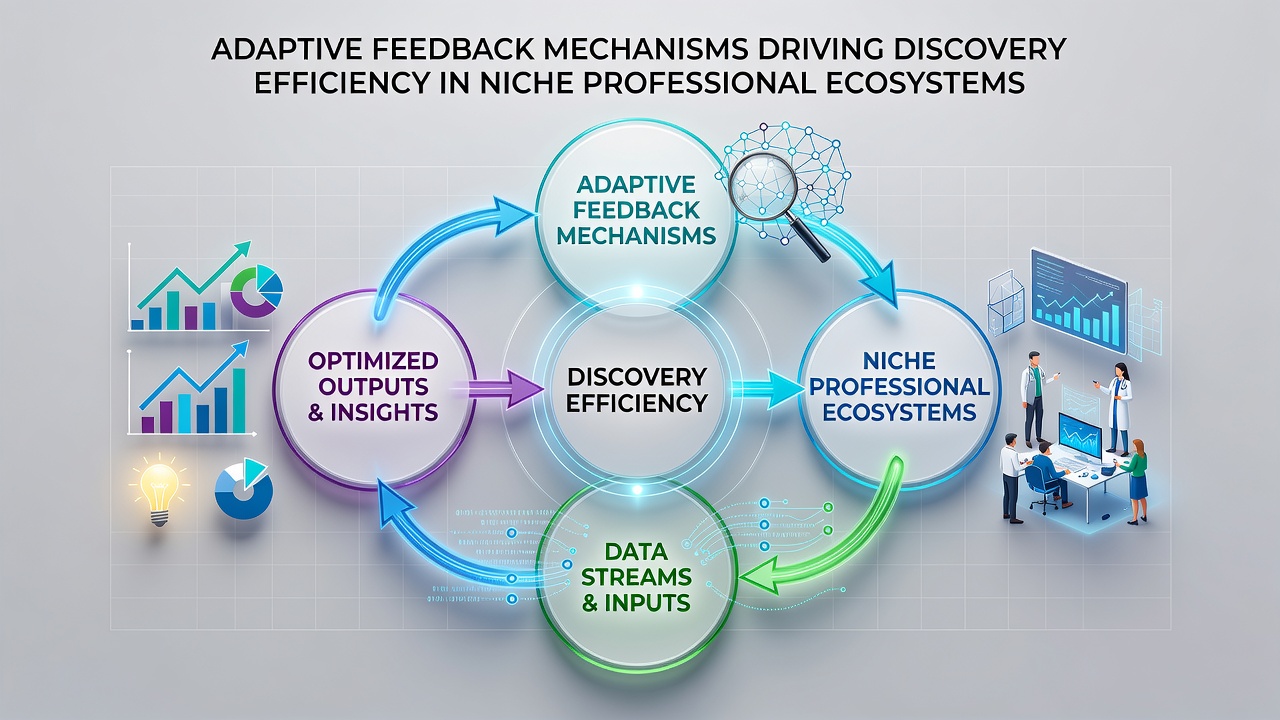
Adaptive feedback mechanisms operate through iterative data loops that refine search and recommendation processes in specialized fields such as bioinformatics, renewable energy engineering, and legal technology platforms. These systems collect user interactions, outcome metrics, and contextual variables then adjust algorithms to surface relevant resources faster than static models. Researchers at institutions tracking professional database usage report that such loops reduce average discovery time by 30 to 45 percent in targeted domains according to internal performance logs shared at industry conferences.
Core Components of Feedback-Driven Discovery
Systems rely on three main layers: input capture from expert actions, real-time model updates, and output ranking adjustments. Input capture records clicks, dwell times, citation patterns, and project outcomes while model updates apply reinforcement techniques that weight successful pathways more heavily. Output rankings then prioritize items shown to accelerate task completion in similar past cases. Observers note that niche platforms handling fewer than 10,000 active users achieve measurable gains because narrower data pools allow quicker convergence on useful patterns.
Take one researcher working in marine genomics who noticed repeated queries for rare enzyme sequences. The platform logged successful retrievals followed by publication credits and adjusted its indexing to surface related preprints earlier in subsequent searches. Within six months the same group reported locating three additional datasets that had previously required manual outreach to distant collaborators.
Implementation Across Professional Domains
Legal technology firms deploy these mechanisms to connect case precedents with jurisdiction-specific rulings. When attorneys flag a document as pivotal the system elevates similar holdings for users operating under comparable statutes. Data from the Australian Research Council shows that firms adopting adaptive ranking saw a 22 percent drop in hours spent on initial case review during 2025 pilot programs. In parallel, engineering consortia focused on sustainable materials use feedback from material testing reports to highlight suppliers whose components performed reliably under specific stress conditions.
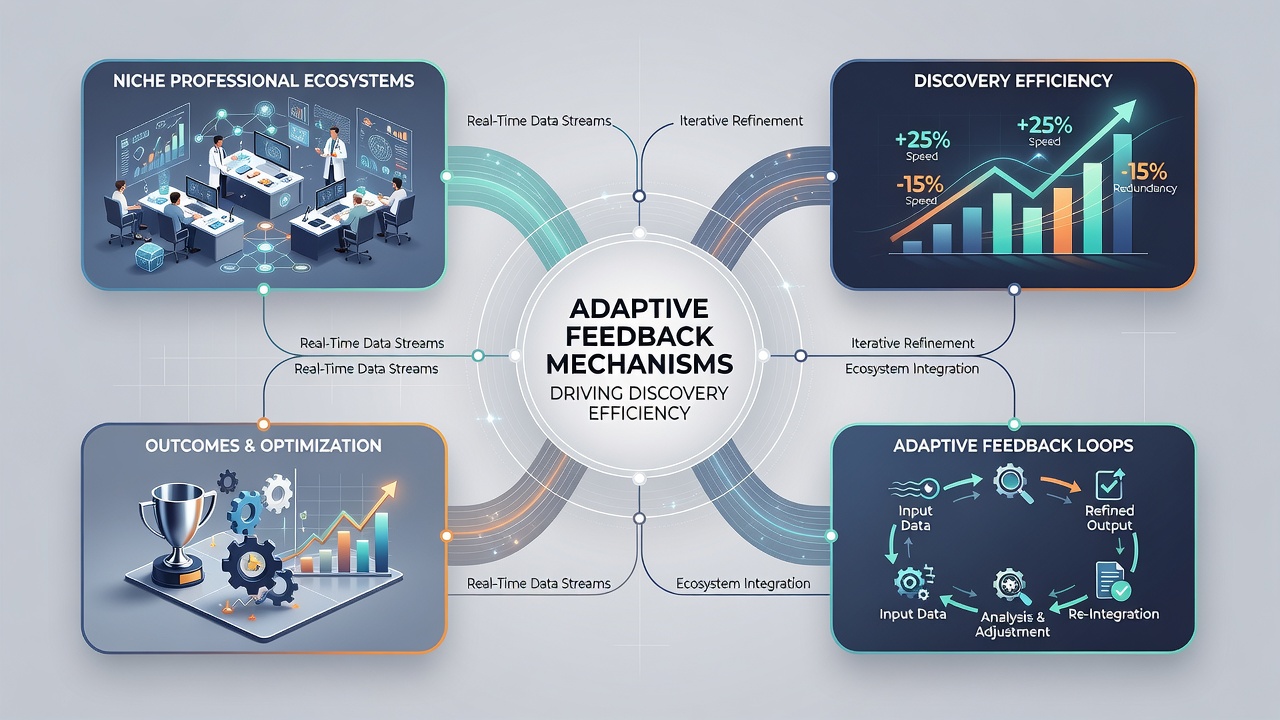
What's interesting is how these adjustments scale with ecosystem size. Smaller networks reach stability after fewer cycles because each interaction carries higher relative weight. Larger ecosystems require additional safeguards such as differential privacy layers to prevent any single contributor from dominating the model. The National Science Foundation funded a 2024 study examining five mid-sized academic repositories and found that feedback latency under two hours produced the strongest correlation with increased citation rates for previously under-referenced papers.
Performance Metrics and Recent Developments
Key indicators include precision at k, where k represents the number of top results examined, and task completion velocity measured in days from query to verified resource use. Platforms report average precision gains of 18 percent after three months of continuous adaptation. In October 2026 several European research networks plan to release comparative benchmarks that track these metrics across medicine, materials science, and policy analysis groups. Those benchmarks will include controls for query complexity and user expertise level so that gains can be attributed more directly to feedback mechanisms rather than external variables.
But here's the thing: integration with existing enterprise tools remains uneven. Some organizations report friction when feedback data must cross firewalls or comply with varying data retention rules. Solutions emerging in Canada involve federated learning setups where models train locally and share only aggregated parameter updates. Early adopters at the Canadian Institutes of Health Research documented stable performance across four hospital networks without moving raw patient-linked records.
Conclusion
Adaptive feedback mechanisms continue to reshape how professionals locate and validate information within narrow domains. Evidence from multiple government-funded projects and industry deployments demonstrates consistent reductions in discovery time alongside increases in relevant output quality. As October 2026 approaches, forthcoming benchmark releases from European and North American research bodies will supply additional data points that clarify optimal implementation parameters for different ecosystem scales. Organizations tracking these developments can reference the cited sources for detailed methodology descriptions and raw metric tables.